
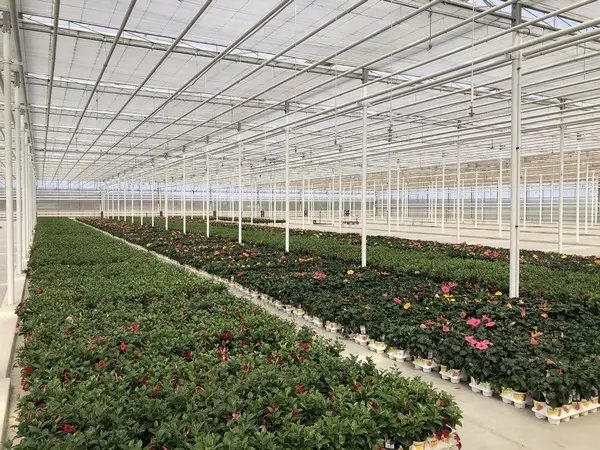
Fogging Systems
Fogging Systems
Control greenhouse climate precisely with high-pressure fogging systems engineered for horticultural environments. These systems generate ultra-fine water droplets that evaporate instantly, cooling air temperatures, raising humidity, and creating the ideal atmospheric conditions your crops need without wetting foliage or increasing disease risk.
Use fogging systems to:
• Reduce greenhouse temperatures by 10-20°F through evaporative cooling
• Maintain optimal humidity levels for propagation and crop health
• Minimize plant stress during heat events and low-humidity conditions
• Deliver cooling without wetting leaves or creating disease-favorable conditions
• Reduce water consumption compared to traditional misting
Why high-pressure fogging matters
Temperature and humidity extremes stress plants, slow growth, and create conditions for pests and diseases. Traditional cooling methods like exhaust fans and evaporative pads struggle during extreme heat, while low-pressure misters wet foliage and promote fungal problems. High-pressure fogging systems (1,000+ PSI) create droplets so fine they evaporate before reaching plants, delivering cooling and humidity control without the downsides. The result: healthier crops, reduced HVAC costs, and better climate control during critical propagation and finishing stages.
Fogging solutions for controlled environments
From simple zone-based systems for small greenhouses to sophisticated multi-zone installations with automated climate integration, AdeptAg offers fogging solutions matched to your facility size and control requirements. Systems feature corrosion-resistant stainless steel components, precision nozzles for uniform distribution, and integration with environmental controllers for automated operation. Built to withstand demanding greenhouse conditions and customized for your layout and climate goals, these systems deliver consistent performance and reliable humidity control.
No, when properly designed. High-pressure fogging (1,000 PSI) creates droplets under 10 microns that evaporate before reaching plant surfaces. This is completely different from low-pressure misting (under 200 PSI) which wets foliage. Proper nozzle placement, adequate air movement, and appropriate timing prevent moisture accumulation. Many growers actually see reduced disease pressure because fogging maintains optimal humidity that prevents stress-related susceptibility.
Fogging typically reduces temperatures by 10-20°F depending on outside conditions, humidity levels, and air exchange rates. The effect is greatest during hot, dry conditions when evaporative cooling is most efficient. Fogging works alongside ventilation and shade systems, it's not a replacement for them but significantly enhances cooling capacity during