Conveyors
Showing - of Products
No Products
Conveyors
Showing - of Products
No Products
/
Conveyors for Greenhouse & Nursery Production
Improve workflow. Reduce labor. Increase throughput.
Conveyors have become an essential automation tool for modern greenhouse, nursery, and controlled-environment agriculture (CEA) operations. As growers face rising labor costs, tighter production schedules, and higher expectations for quality and consistency, conveyors offer a proven way to streamline movement, eliminate bottlenecks, and create predictable, efficient workflows.
AdeptAg’s conveyor solutions are designed specifically for horticulture environments, giving growers the ability to move plants, pots, trays, and media with speed, precision, and reliability.
Why Growers Should Use Conveyors
In most operations, manual material handling is one of the biggest hidden costs. Workers carrying trays over long distances, moving carts between stages, or transporting soil to production areas contributes to slow cycle times, inconsistent flow, and unnecessary labor hours. Conveyor systems address these inefficiencies by introducing continuous, automated movement, keeping production running smoothly and minimizing downtime.
- Reduce labor requirements and operational costs
Conveyors automate transport, allowing fewer people to accomplish more work in less time. By significantly reducing manual carrying, repetitive lifting, and staging tasks, growers can redeploy labor to higher-value activities. This reduction in repetitive manual work also lowers the physical strain on employees and reduces risk of injury. - Increase productivity and throughput
Consistent flow is critical for meeting production schedules. Conveyors keep materials moving at a steady pace, helping growers maintain predictable output. Whether feeding potting lines, supporting transplanting processes, or handling soil movement, conveyors prevent backups and help workers stay focused and efficient. - Improve workflow consistency and plant quality
When plants or trays are manually carried, process timing becomes variable. Conveyors standardize the pace of work, improving uniformity across each stage of production. This steadier flow supports more consistent watering, potting, filling, and transplanting which contributes to healthier, more uniform crops. - Support ergonomic, safer working environments
Greenhouse and nursery work can be physically demanding. Conveyor systems remove many of the most strenuous tasks: lifting heavy trays, bending repeatedly, or pushing carts long distances. By improving ergonomic conditions, conveyors help create safer workplaces and reduce fatigue-related errors.
How Conveyors Fit Different Operational Needs
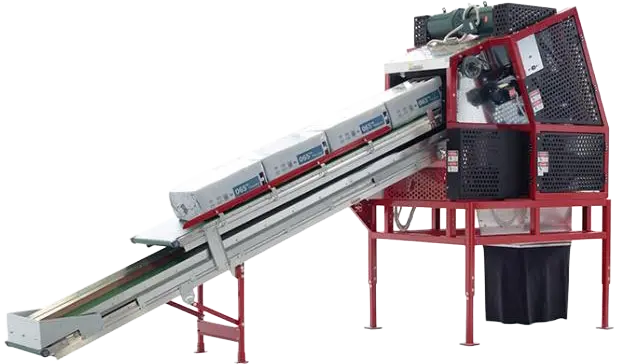
While every greenhouse is unique, conveyor systems are versatile enough to fit high-volume production lines, compact work areas, or flexible task-based workflows. Some conveyors are best for mobile, short-distance movement; others support long continuous runs or integrate directly with automation such as potting machines, transplanters, soil systems, and fillers. Media conveyors handle high-capacity soil delivery, while plant-handling conveyors manage transportation through multi-step processes.
Together, they offer scalable solutions for facilities of any size—whether adding a single flexible conveyor to speed up a potting line, or building a fully integrated automated workflow.
A Strategic Investment in Growth
For growers looking to improve efficiency, increase output, or offset labor shortages, conveyor systems are one of the highest-impact investments available. They reduce operating costs, stabilize production flow, and enhance the consistency needed to meet customer expectations. As demand for greenhouse-grown crops increases, conveyors help growers expand capacity without expanding labor—supporting long-term growth, operational reliability, and higher profitability.

Custom Solutions for your Operations
Connect with our experts to explore horticulture solutions that drive efficiency and sustainability.